An indifferent weather forecast changed our plans for this weekend, we traded the Dorset countryside to meet in the Bridge Street car park at the top of the Titchfield Haven Canal Path. It had been raining when I left home but it was dry on arrival, if a little overcast. There were signs though that conditions would improve. As we set off down the path towards the Posbrook Floods, scanning across to the Bridge Street Floods there were six Avocet present and quite a few Black-tailed Godwits, some of which flew off down the valley. Looking across towards Posbrook there were Swallows, House Martins and Sand Martins hawking low over the water the first real concentration of hirundines I have seen this year.
We were here to find the two immature Glossy Ibis that have been present for about a week. They seemed to have been mobile with reports to the east and west of Titchfield, but more recently they have taken up residence on the floods at Posbrook. As we approached it was clear that there was a good water level, where this had come from was not clear, but it obviously was suiting the Ibis. There was a brief glimpse from the main footpath, but we decided to walk to the cross path and view the floods looking north. It was a little muddy but easily passable and there was a good view up the valley.
After a short wait the two Glossy Ibis finally appeared from within the grasses that surrounded the open water.
They made their way along the edge of the water, ducking in and out of the grass and reeds
Feeding in front of them were Black-tailed Godwits and four Avocet, both species adding to the wetland experience.
Finally one coming out into the open water.
A big surprise was a lone drake Wigeon seen upending alongside the reeds and in the same area as the Ibis. Was this a duck that never left or a wanderer from somewhere else, still an unusual sight here in early June.
One of the Ibis flew across the grass and disappeared while the second finally appeared and started to make its way back towards us on the path.
It as now possible to see the speckling on the head and neck which ages these as immature birds, probably their second year. There was some colouration in the wings but at the distance we were viewing you had to look hard
The feeding technique in the water was very similar to that of the surrounding Avocet, head swept side to side and then the head thrown back to throw up whatever it had caught and then swallow.
Numbers arriving in the United Kingdom have steadily increased over the last few years and I would not be surprised if this year sees the first confirmation of breeding here.
Then suddenly both birds flew across the water.
They dropped down a little closer but remained out of sight
We waited to see if they would come any closer, but in fact they flew a little further away.
Alongside the Ibis and the Wigeon the other significant record of note was the number of Black-tailed Godwits. Estimates vary from between a 150 and 300 birds, but it was by far the largest number I have seen here at this time of year. Plumage varied, some showing the brick red breeding plumage, while others were in the shabby grey winter colours. In flight though they still look impressive with the white wing stripe.
There was a little bit of excitement when a Cuckoo flew along the line of trees, but after that we decided to head back and make our way down to the sea wall at Hill Head.
The tide was rising at Hill Head, but there was very little on the beach. In Duck Bay there were more Black-tailed Godwits feeding close to the road, one individual was in summer plumage.
Others showing varying degrees of red.
We walked to the visitor centre, stopping off to check the exposed mud at the back of the sailing club. Four Sandwich Terns were on the mud, two pairs, here one of the pairs.
Walking into the reserve on the west side there was a very confiding Sedge Warbler singing from a small oak tree in the reeds.
The Meon Shore Hide was quiet, however outside there was the cacophony of noise associated with the nesting Black-headed Gulls. Every island was covered with gulls either sitting on nests, watching youngsters or just arguing with a neighbour.
Avocet could be seen all across the scrape, but one was close in front of the hide. This individual though had a few badly damaged primary feathers, the quill appeared completely dead and looked initially like straw. While the bird fed happily it did not look very well and was completely isolated from any other Avocet.
It was June, it was quiet, so a Cormorant struggling with an eel is always worth a watch and a few photographs.
It couldn't escape the attention of the gulls, although I wasn't sure if they were interested in the eel, or were concerned the Cormorant was a threat to the chicks.
It made its way to the island in front of the hide
And continued to be mobbed by the gulls.
But finally came ashore and dispatched the small eel quite quickly
Then aired its wings for a while before flying off followed by the Black-headed Gulls
We found one Mediterranean Gull on one of the islands, but others were overhead.
An undamaged Avocet came closer to the hide, this a black and white image.
I liked the view of the Black-headed Gulls eyes with the white rings showing against the brown hood.
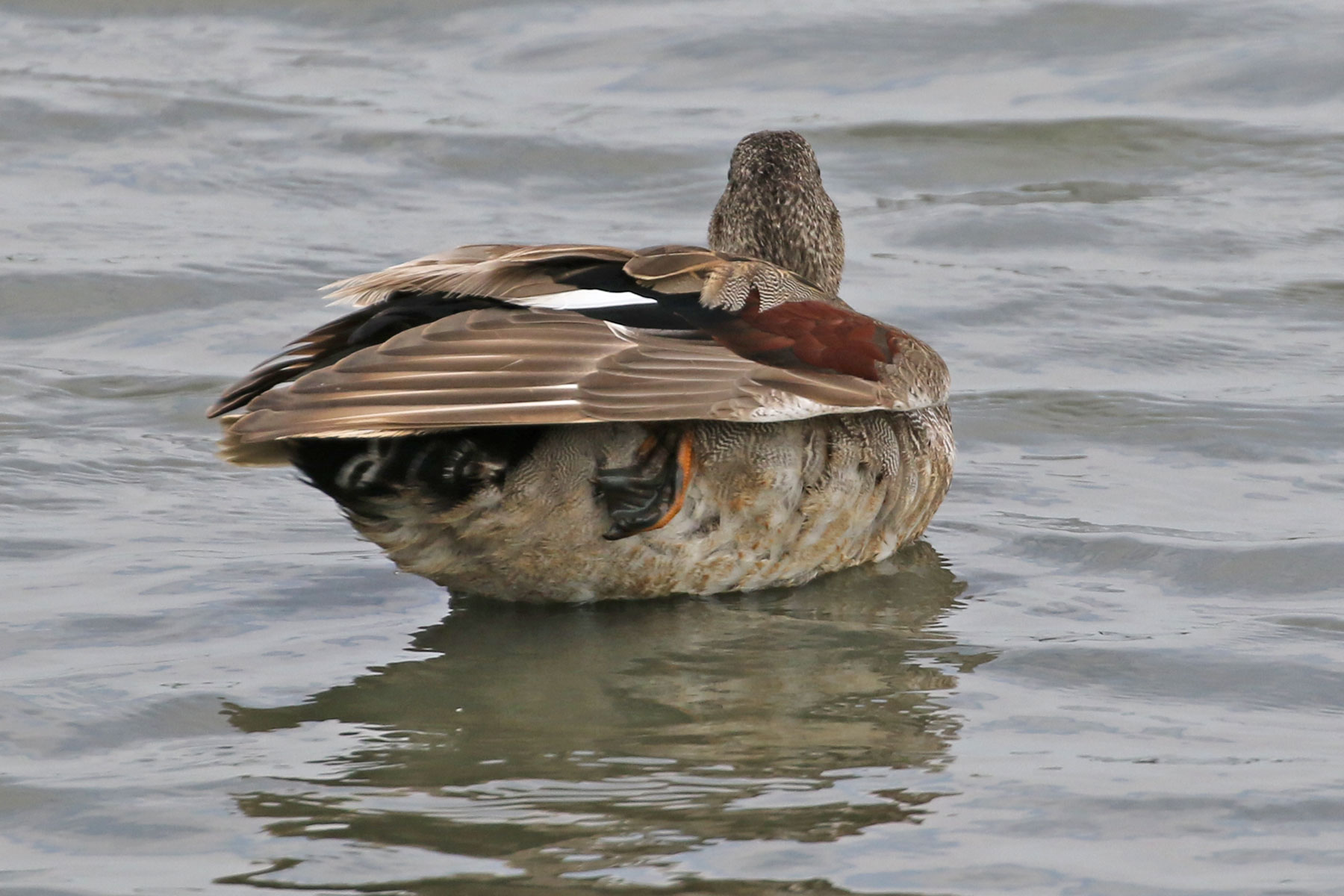
For some reason there is always a drake Gadwall sitting close to the island in front of the hide, no matter what time of year it seems to be there. It usually is preening too as is this one, putting the wing through some stretches.
With the concentration of black-headed Gulls and Terns there will always be somebody that is looking to grab an easy meal for their young. Both Great and Lesser Black-backed Gulls would patrol up and down the scrape, sometimes evading the mobbing gulls and waders, but also challenging them making passes to see what was vulnerable. We watch two attacks, one of which was successful and one in which a Black-headed chick was grabbed from the water but then dropped, the chick appeared OK from the ordeal. I chose not to photograph the drama, instead I focused on the point at which the marauding Black-backed Gulls decided to make their move.
On deciding it was time to leave the reserve a couple of second year Mediterranean Gulls flew over calling.
From Hill Head we headed to Browndown South, our quest here was to try and locate a sleeping Nightjar, I an had been successful the day before so we wewre confidentthey were about.
Walking onto the site there were House Sparrows, Greenfinches and Linnets singing. A little further in we came across a very elusive Dartford Warbler that was singing from within a bramble bush and only showed to fly off.
Another feature across the site was the number of Silver Y Moths, as we walked through the heather we would kick them up and they would skim across the heather and settle within the branches.
The Silver Y migrates to the UK in massive numbers each year
- sometimes, an estimated 220 million can reach our shores in spring! When at rest, the Silver Y holds its wings
back along its body in a tent-like shape. The wings are patterned with dark grey,
silver and brown, and display a characteristic, silver, Y-shaped mark on the
forewings.
On reaching the area where Ian had found them yesterday we started a slow stroll through the heather and along the shingle paths checking the sheltered areas that were out of the wind. Everywhere we looked we drew a blank and we found ourselves walking around in circles and checking the same spots over again, what was that definition of insanity?
Along with the moths there was also a very smart female Emperor Dragonfly
We widened the search area and came across a small group of trees where there was some items of clothing scattered underneath. We stood discussing this, but as we turned to walk away a Nightjar flew up silently in front of us from a sheltered spot we hadn't checked. Truth be told we were so engrossed in the clothing and why it was there that we just didn't both to check the spot.
As the Nightjar flew up you could clearly see the white spots on the outstretched wings indicating it as a male bird.
Talking the line that the bird flew we decided to search that area once more in the hope that it had settled in one of the sheltered spots. We covered once again much of the area we had walked earlier. In one of the sheltered open spots I found something of interest, not a Nightjar but a good find, quite a good sized female Adder.
She watched us through out and we made no attempt to get any closer.
Female Adders are usually brown with a dark brown zig-zag pattern, However the adder can demonstrate a tremendous diversity in
colouration. Black adders are not unusual, and base colouration can vary from
creams to browns or oranges.
Eventually she became fed up watching us and she turned and slipped away quite quickly into the heather and gorse. We resumed our search but were probably a little more wary as we walked across the heather.
A Holly Blue was a welcome distraction, settled with wings half open on a leaf.
As I said earlier we were walking around in circles and soon enough we came back to the spot where we had found the adder, she had returned to the open but was curled up, using the body to act like a heat exchanger.
Another distraction was another dragonfly. I had to identify this one at home after the event, this is a Black-tailed Skimmer.
It was becoming clear that we were not going to find Nightjar any more so we decided to call it a day and made our way to the entrance and eventually the car. As we left the site there were several Ladybirds conspicuous on the top of the plants. This I think is a Seven Spot Ladybird, one of our commonest Ladybirds, found in all kinds of habitats. For the record there ar nine species of Ladybird native to Britain.
A typical early June day, breeding in full swing and sometimes something of interest to see, despite it being quiet. The Glossy Ibis were welcome and although it was a frustrating brief view it is always good to catch up with the Nightjar. An Adder in June was a bonus too