The good weather continued and over the last few days the temperature has slightly increased to record some of the warmest days of the year. With bright sunshine and clam conditions it was ideal for a walk around the Keyhaven - Lymington reserve, so Ian and I decided to meet at the sea wall car park in the morning.
While I waited for Ian to negotiate the morning traffic around Southampton, I chased a Chiffchaff part of the way along the Ancient Highway. It was singing to start with as it caught flies nut the song was more subsong, it then changed to the usual call.
We set off over the Old Tip towards Fishtail Lagoon, as is usually the was a buck Roe Deer was in the marsh at the back of the lagon
Fishtail for once was relatively quiet. There were Brent Geese in the foreground and at the back of the lagoon Teal, Pintail and Wigeon. Wader numbers were few as the tide was out, but starting to rise. We walked to the edge of Keyhaven Lagoon, then turned back and walked around Butts Bay where Dunlin, Ringed Plover and this single Grey Plover were feeding.
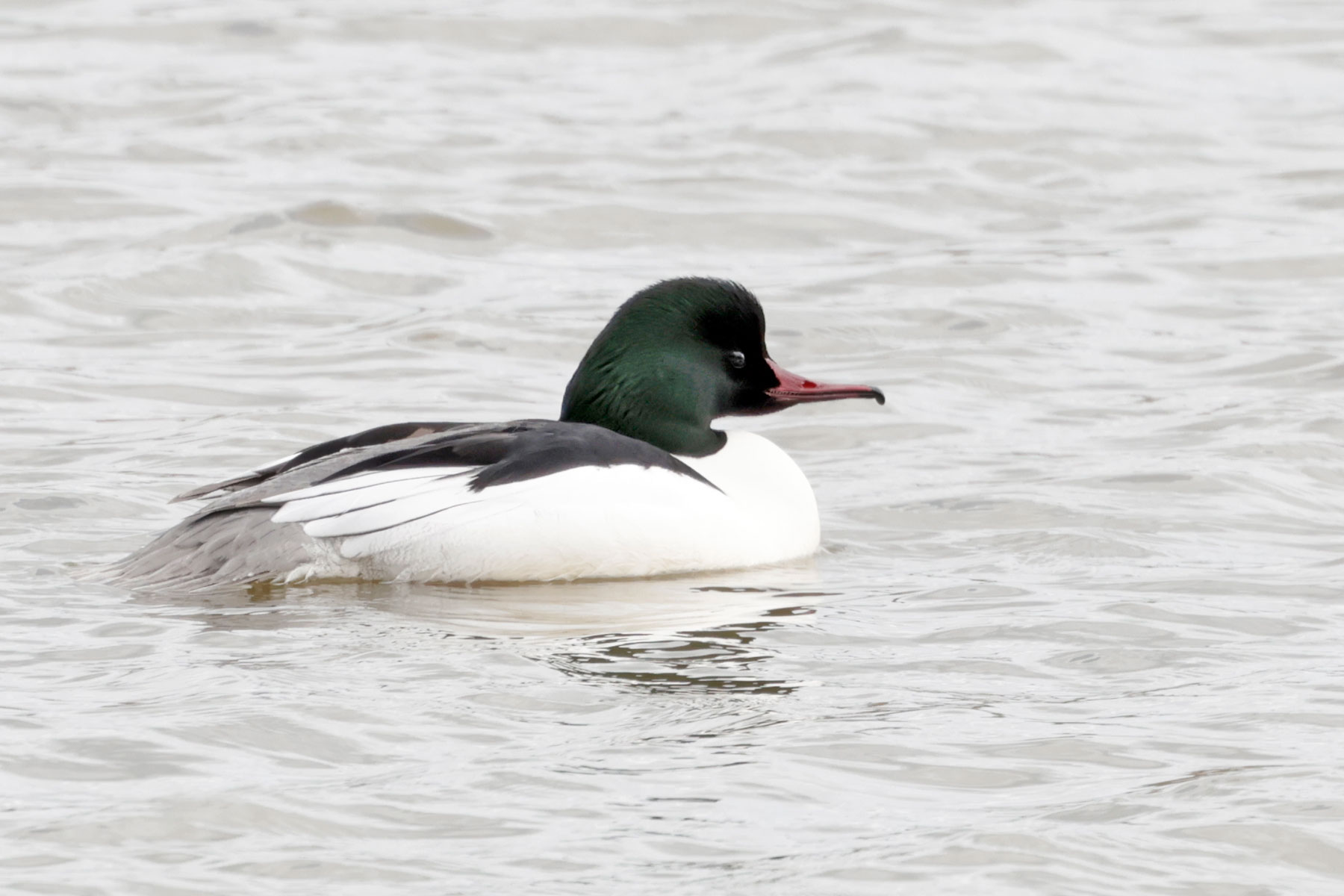
A smart drake on the Jetty Lagoon.
We walked to the east along the sea wall past the Jetty and on to Oxey Marsh. we became quite engrossed in a discussion on the state of the world and were knocked out of it when we were asked by another walker if the bird in the lagoon was a Spoonbill. It turned out it was and we had completely missed it.
This was an immature bird, told by the pink bill.
A little further along a Greenshank at roost by the side of the bank, taking in the warm sunshine.
A Little Egret stood, sentry like on the grass of Oxey Marsh.
At Slaterns Lagoon a Greenshank was feeding in the west corner.
The walk to Normandy Marsh proved to be a little quiet, but on reaching Normandy there was quite a bit of action from the south side of the lagoon.
There were plenty of Avocet, again probably over fifty and the majority were paired up feeding together with the sweeping motion.
A good view of the feeding action.
So there was feeding, some mating taking place and of course some snoozing.
There were also some fights and for some reason birds would fly from one side of the lagoon to stir things up with a pair.
The Black-tailed Godwits are starting to acquire their summer plumage with several birds showing the brick red plumage that can be quite striking at this time of year.
Unlike at Titchfield adn Hayling Island Mediterranean Gulls do not appear to gather here at Normandy. There was though a few birds around the marsh and they would announce themselves with their distinctive calls as they flew overhead.
We walked around to the east side scanning the open marsh for any sign of Wheatear, there weren't any. As we rounded the tip of the east side we could see a Spotted Redshank feeding in a pool quite close to the path, so close in fact, the fence wires were a potential problem. However we were able to go up the bank a little and then the view was clear.
Along with Greenshank and Avocet this is a very elegant wader found here in the UK.
Ironically, in the next pool to the Spotted Redshank was the other "elegant" wader, the Greenshank.
We decided to settle down and have lunch looking across the lagoon. There was a group of twelve Spoonbill on an island in the middle and they were in the process of waking up, with one passing over our heads and flying towards Beaulieu. It caught us unaware, but we were ready for the next one.
The black tips to the wings mean this was an immature bird, however, the black tips add something to the Spoonbill in flight.
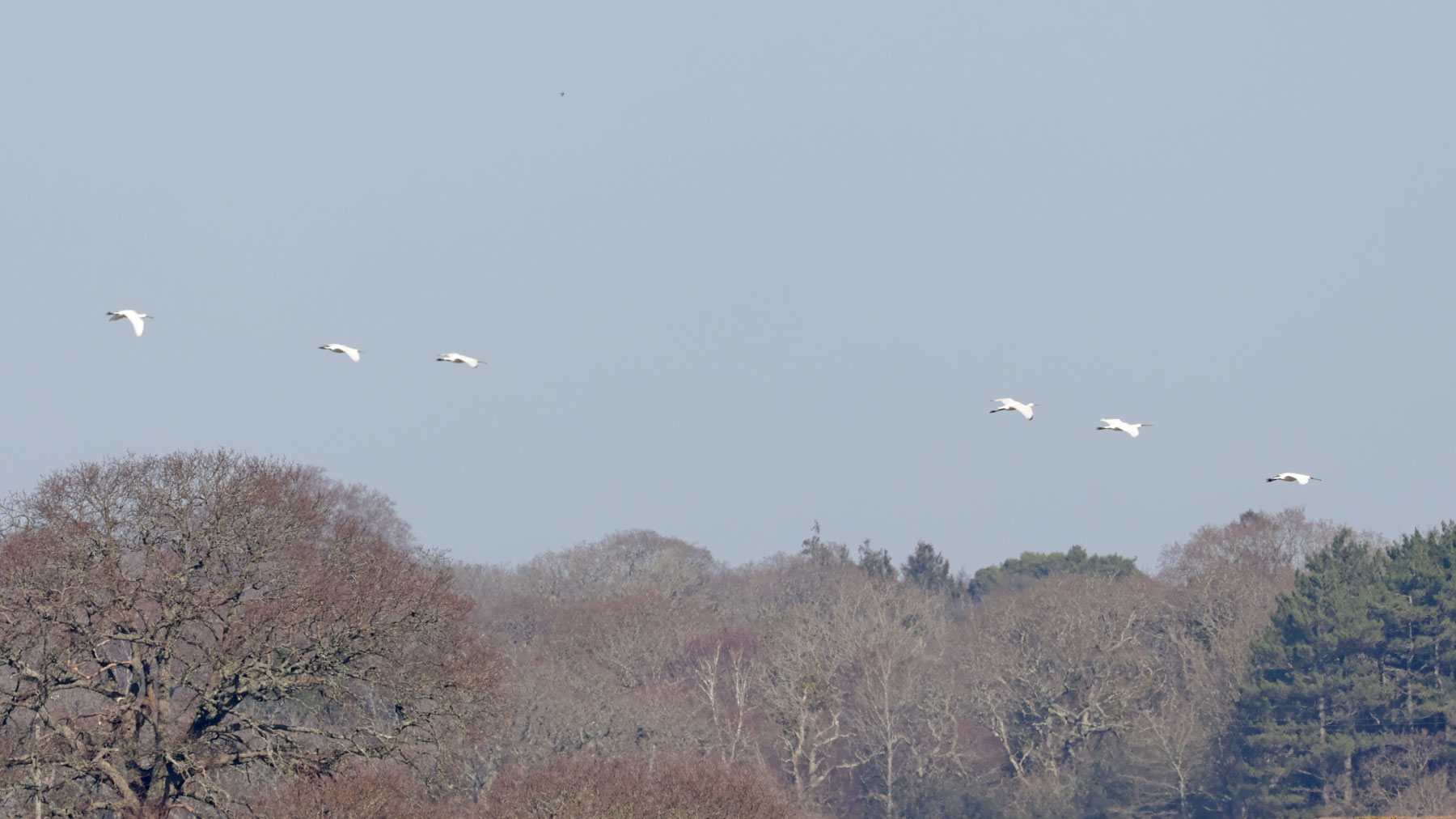
With two gone we wondered if the others would leave as well. We sat watching as they moved around looking restless, but no one left. We decided to move on and as we reached the corner, looking back the Spoonbill were off, we should have waited a little longer. First was a group of four.
Then the remaining six. We watched as they flew along the coast towards Needs Ore. Interestingly six Spoonbill were reported at Titchfield later that afternoon, it was probably these six birds.

The water levels in Oxey Lake were still low and there were Dunlin and Black-tailed Godwits feeding. The old dock area allowed us to be able to use as cover to get closer to the godwits, several were looking smart in their summer plumage.
They looked very smart in the low sunshine.
We walked back along the sea wall looking for the reported Slavonian Grebes, but without any luck. The only birds seen on the sea were six Red-breasted Merganser, seen at distance.
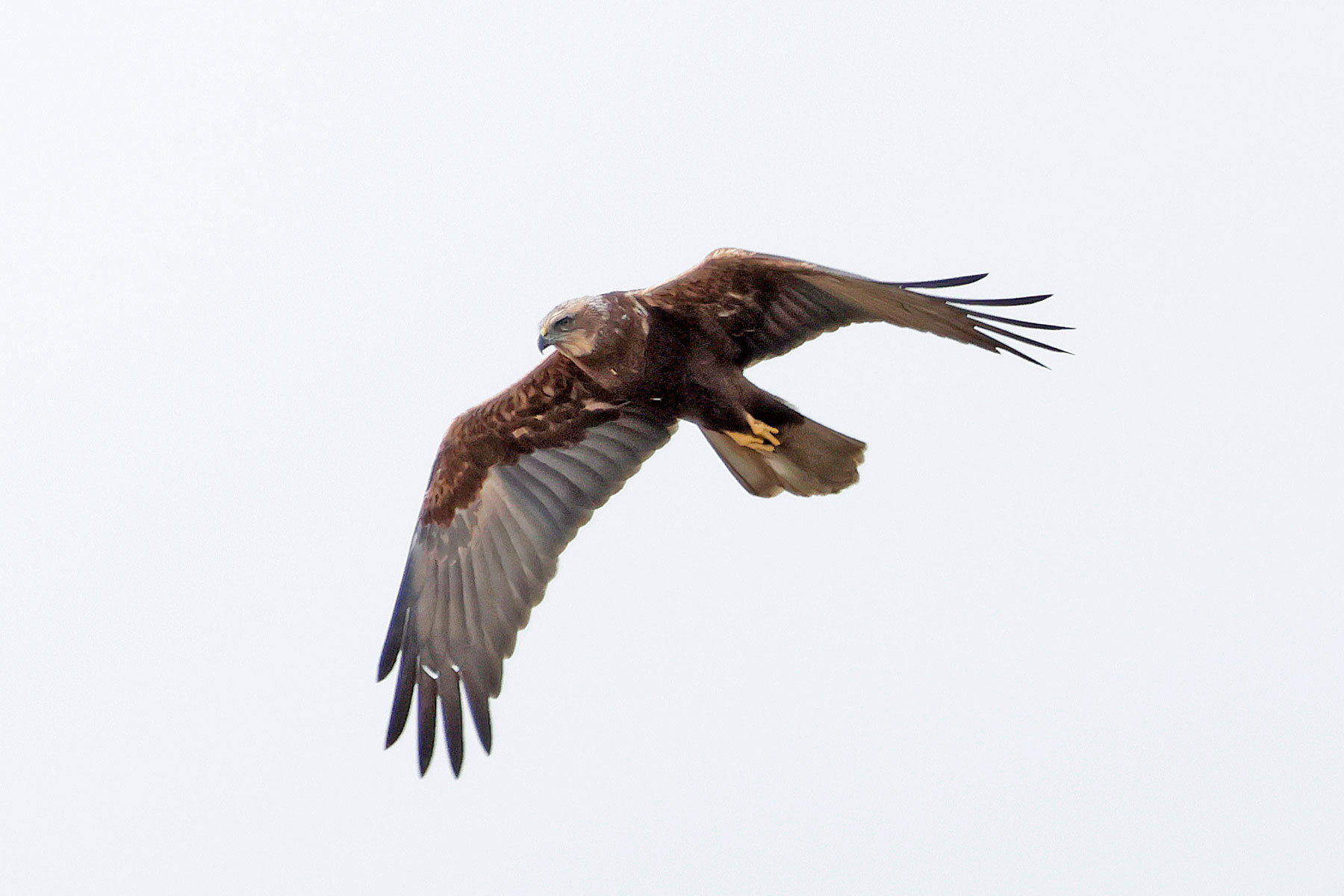
As we crossed the Old tip a male Marsh Harrier came low over Pennington Marsh and then towards us, only to divert away at the last minute.
Shortly after the male had disappeared away over Fishtail a female came from the same direction but kept quite low, as if using the bushes as cover.
It spent some time around the bushes before coming close but then veering off towards Fishtail Lagoon.
Back a the car park about 100 Golden Plover went up over the marsh, but very little else. After quite a long walk we decided to call it a day. Despite the prolonged good weather we were still to find any migrants, hopefully they will start to appear, they must be on the move.