Showing posts with label Great Tit. Show all posts

Tuesday, 24 October 2023

21st October - The New Forest and Blashford Lakes, Hampshire

The weather forecast was initially iffy for this Saturday, the predictions swapping and changing almost every hour.  In the end Ian and I opted to meet at the Bramshaw Telegraph in the New Forest.  As I arrived in the car park the skies were clear above, but with surrounding cloud that was subduing the sun rise.  
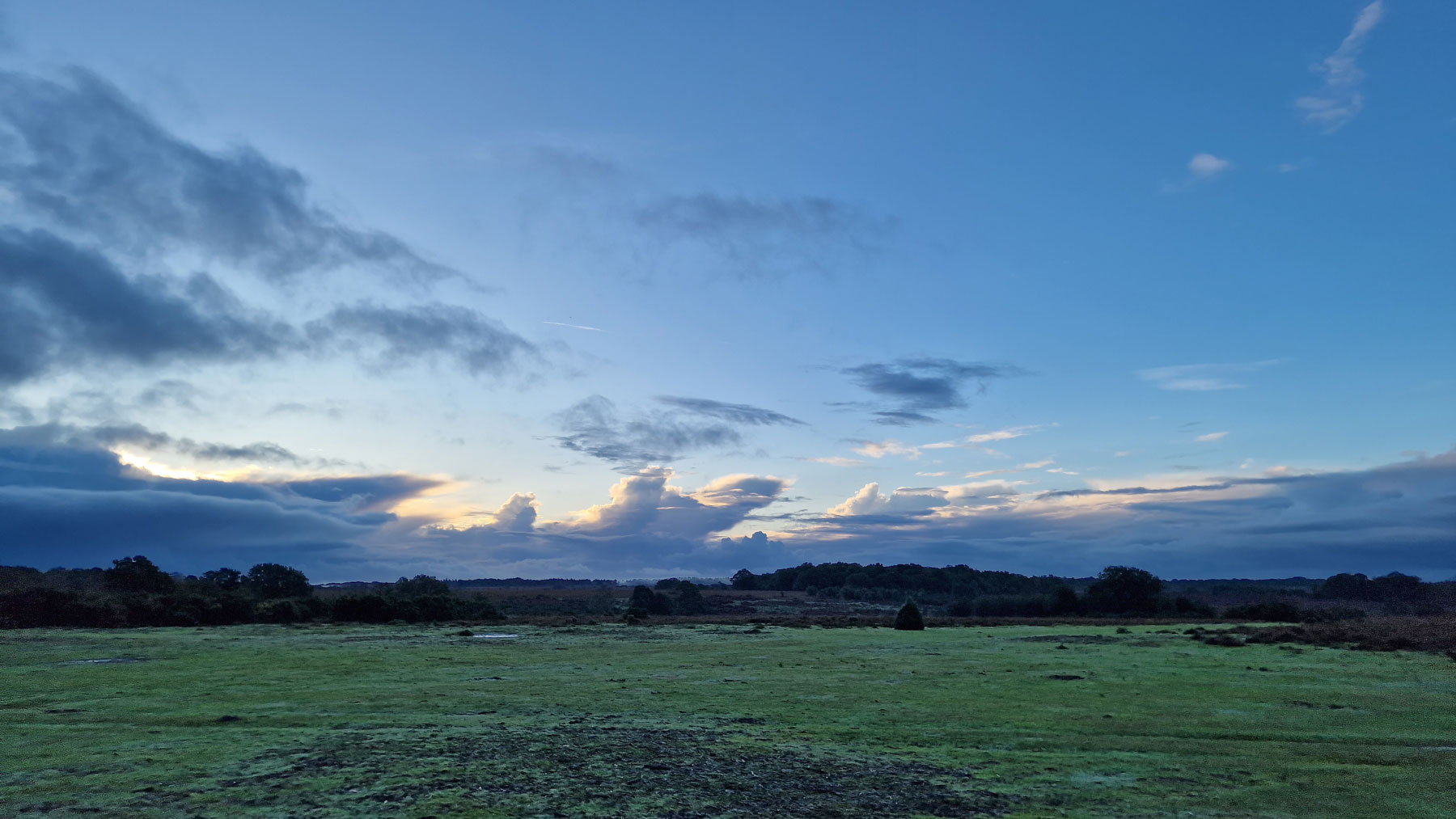
Rain on Friday and overnight was producing a hanging mist around the hollows of the open moor.  Away to the north the electricity pylons added to the moody scene.

We set off from the car park in the direction of Ashley Hole.  Immediately in the gorse we were aware of a number of Goldcrests and Blue Tits, quite possibly they had arrived overnight and were now busily searching for food in the gorse.

A little further along we heard the chatter of Fieldfare and the "seep" calls of Redwing over head, these thrushes were then joined by several Mistle Thrush.  The light was difficult, but this can be seen as a Mistle Thrush.

It was a stunning morning, the sun now having broken free of the surrounding clouds, being behind us as we walked west it was lighting up the distant trees and bracken.  I stopped to take in this lovely reflection in one of the pools created over the last few days by the heavy rain.


The mist was still holding in places, but where the sun reached it was burnt off almost immediately.

Ian remarked on the lack of wind and how that may play in our favour by keeping  the bad clouds away.  I came back with if it does rain it may take a while to clear, we laughed and didn't consider this happening.

Winter thrushes were everywhere, we searched amongst the Fieldfare and Redwing for any sign of a possible Ring Ouzel, but with no luck.

The sun was now breaking through the trees to the south of our path creating a lovely morning scene with the reddish brown of the wet bracken and the trees.


As the sunlight crept across the bracken it picked out two ponies grazing.


It really was an idyllic morning and there was no indication of any bad weather to come.


Absolutely stunning light.

Away to our left as we walked towards the west there were many Redwing, Fieldfare and Blackbirds, the latter mainly the continental birds with black bills.  As we stopped to watch the thrushes a Dartford Warbler called at first then produced snippets of sub song.  This one silhouetted amongst the bracken.


The silhouette unmistakeable.

We were then lucky to get one appear at the top of the gorse, the purple and wine colour picked out by the morning sunshine.


It then dropped down into the gorse but appeared again to continue singing.


Then it was gone, but just as we were about to walk on it appeared once again at the top of a Holly Tree.

We had been hearing the belching calls of buck Fallow Deer, the rutting season now in full swing.  Finally we managed a glimpse of a buck resplendent with a full set of the palmate antlers.


A doe appeared from behind the bracken.


Fallow Deer were brought to Britain in the 11th Century from the eastern Mediterranean for hunting, today the Fallow Deer is the most widespread and abundant of our introduced deer, found through out England, and more patchily in Wales and Scotland.


The buck was then joined by several doe and younger deer.


The buck, having seen us then led it's does away down the slope and into the wood and out of sight.  The calling though continued.

These two young deer looked to be separate from the others.

We walked on and noticed that cloud was building up, and away to the south west they looked quite menacing.  Ever confident we returned to our search of the bushes and trees for the thrushes.  Once in a tree they seem to become invisible, this one Redwing proved to be a little different.

Despite it being the third week of October, the trees were still holding on to green leaves, the bracken was turning the reddish brown, but there was still no sign of autumn colour in the trees.  One reason for this was the lack of cold nights, while the changes are influenced by day length, they also require a change in temperature and that hasn't happened that often so far this year.  What was clear though was that it was a n excellent year for berries and all seeds on the trees such as acorns and beech mast.

WE came across a small copse on the edge of the main wood.  Here there were Crab Apple trees and Holly bushes and they were all laden with fruit and berries.  We could see all five common species of thrush at this time of year, but not the sixth that we hoped for.  Blackbirds and Song Thrush would call as they moved from tree to tree and Redwing Mistle Thrush and Fieldfare would move from the bracken to to the trees, we assumed they must vary the diet, searching for invertebrates in the bracken.

As well as the thrushes there were quite a few Chaffinch and Greenfinch and I also managed to get a quick glimpse of a Hawfinch.  Some of the finches were feeding at the base of the trees in the copse and we quietly approached them in the hope of finding something interesting amongst them.  As we walked into the copse it started to rain, light at first, but gradually it became heavier, and we sheltered under one of the trees, but as the rain fell the tree was just as wet.  After about half an hour the rain eased slightly and even to the point where it almost stopped.  We set off in the hope we could continue our walk.

Coming out of the copse we joined the path, but stopped once again as many thrushes pored out of some holly trees.  As we watched we debated where to go, fortunately the thrushes held our attention and it started to rain again, this time much harder.  If we hadn't been pre occupied with the birds we may have set off for Pitts Wood Inclosure, and that walk would not have had any shelter.  As it was we had some but the rain was getting heavier and the paths around us were now turning into fast streams.

A group of ponies came into the copse, probably looking for cover, but moved off when they saw us.  We were then visited by a buck Fallow Deer, very distinctive with a superb rack of Antlers and a very dark colour.


He stopped to look at us as if wanting to use the trees were under for cover.  I chanced the camera despite the rain.  The grainy appearance is actually the rain falling!


In summer the coat is a reddish brown with numerous white spots and a white horizontal line on the flank, in winter they are duller and spotless.  However coat colour is variable within herds and may contain entirely black, like this buck and also creamy white individuals.


There was no sign of a hareem so maybe he was on the look for a fight, or had just lost one.  The rut takes place in October and early November.  Some bucks gather hareems of does while others may wander in search of receptive females and mate opportunistically.


The mating strategies are diverse, but most establish their stands and attempt to attract females by calling, in some case there may be leks with males holding small area and attempting to attract the females.


As he walked away I was able to attract him to stop and look back at us, or where the noise came from.  This put him into the best light despite the relentless rain.


After the black buck had moved on, a little later we were visited by another buck, this time the antlers were not so developed probably a younger buck and it had the more usual coat appearance but the rain didn't help the light.

It would brighten to the south west and we hoped the rain would ease, but it didn't.  Sheltering under trees became pointless, the trees leaves so wet that they were falling on us.  I was beginning to get a little worried about the camera equipment but there was little I could do than what I had done already.  The sun appeared through the clouds, but the rain continued.  All around us pools were appearing and the water ran past along the track like a torrent.

Finally it began to ease and then enough to allow us to set off back to the car park.  It was still drizzling though while away to the south there were glimpses of blue sky, we were just unlucky we were on the edge of a storm that was very slow moving.  We tramped back through huge pools of water, it was amazing how the landscape had changed some much, so quickly.

Back at the car park we were able to dry out a little and we took the time for lunch.  It was then a case of what do we do next.  Neither of us had the appetite to head back out into the forest, so we opted to visit Blashford Lakes and the cover afforded there of the hides.

We headed for the Tern Hide, walking in there was very little about and what was in front of the hide, two male Pochard immediately flew away to the far side of Ibsley Water.  Scanning through the duck there were Wigeon, Gadwall, Shoveler, Teal and Mallard around the edges while in open water quite a few Tufted Duck and one female Goldeneye

On one of the exposed islands at the back of the lake stood a lone Great Egret, a bird that was once only found here at Blashford, but now seems to be everywhere.

Surprisingly there were no Canada Geese but instead a group of 31 Egyptian Geese.  On the right hand side of the hide there were a few Meadow Pipits and Linnet on the ground and along the sure there was a Buzzard which was quickly dismantling a bird, but we were not able to identify it, possibly a duck, and probably one that was already dead and the Buzzard had found it.


With little else on offer we drove into the main car park and headed for the Woodland Hide.  Nothing special here but the usual subjects, Blue, Great and Coal Tit, Goldfinch and this very smart Greenfinch.


The Great Tits were also looking quite smart.

A visit to the Ivy Lake South hide was not much better, a couple of Great Crested Grebes, Jays flying back and forth and a fly past Kingfisher the highlight.

Not one of the better days, but looking back the Dartford Warblers and deer were excellent and I wonder if we would have got so close had it not been raining.  And my did it rain!

Monday, 23 November 2020

21st November - The New Forest, Hampshire

Ian and I had toyed with the idea of some time in the Forest over the last few weeks, but reports from elsewhere had meant we stayed away.  This week though there were reports of Great Grey Shrike and Hen Harrier so we decided the time was now right.  The first stop was to be north of the A31 at Milkham Inclosure. I arrived at the car park just before dawn.  It was overcast but dry and relatively calm.  The choice of footwear was wellingtons, there was every likelihood the trails would be wet and muddy and for once this autumn it felt a little chilly.  

We set off down the main track from the car park but turned off to walk through a small copse of Scots Pine.  Almost immediately we could hear Crossbill calling from above the top of the trees and Ian managed to find a male in the usual location at the top of a Pine tree.

The conditions were very poor for photography, quite dull and with an almost white sky as a background.  I found it necessary to over expose by three stops and even then it didn't seem enough, but with the ISO so high the images were very grainy


It continued to call from the top of the tree, a female having flown off as we picked up the male.  The male then flew to another tree and once again perched at the top.

As it’s names suggests, the common crossbill has a large bill that is crossed at the tip - perfect for picking the seeds out of pine cones.  It feeds by flying from cone to cone and can often be seen in larges flocks near the treetops, although it regularly comes down to pools to drink. It is resident all year-round, but some years 'irruptions' occur when it becomes widespread and numerous as it is joined by Continental birds looking for food and which may stay to breed. They nest very early in the year, hatching their chicks in February and March to take advantage of the new crop of pine cones. They have even been known to breed all year-round when there are good cone crops.  They nest in conifer trees, constructing small cups out of twigs and moss, and lining them with hair.

The males are brick-red, while the females are olive-green, with a yellow rump. 


At this time of the year finding good birds in the forest requires patience and a lot of leg work.  We walked on with the calls of Goldcrests, Coal Tits and more Crossbills coming from the trees.  We turned north and headed towards Broomy Plain.  This took us through another plantation.  While most of the leaves were gone from the trees there were still a few birches hanging on to their golden yellow leaves.

We came out on to a single track road and walked alongside it.  Meadow Pipits were in the heather, once flushed they would perch in the heather.


Unlike the inclosures we had walked through, Broomy Plain was open, mostly heather and the odd scrub and Gorse.  We constantly scanned across the plain but with little about.  A Kestrel drifted across hunting as it went  and of course there were the usual crows to raise the hopes.  

Looking south the skies were very moody with gaps in the cloud allowing shards of sunlight to fan out across the sky.

We walked to Broomy Lodge and then followed the track alongside the fence and through some woodland.  Here there were Goldcrests, Chaffinches and also at least three or four Firecrests that would provide very fleeting views in the holly trees.


With a bit of patience I was able to get some good views, but still in very poor light which provided more grainy images.


Great to catch up with a bird that I last saw this close up was in the Spring and the first lockdown


Walking on we came out into the open and a good size flock of Redwing and Fieldfare, the Fieldfare showing a little better.


Ian then found a single Hawfinch at the top of one of the Beech trees, I just manged to get on it before it flew off.  We searched the tree tops for any more and managed to locate one at the top of these trees.  As you can see I didn't get the photograph.


We decided then to walk on to Cadman Pool, there had been a report of Goosander in the week and it allowed us to follow the trees while also being able to see over the open heath.

A distant Green Woodpecker appeared very small, which it was as it was a long way off.


A little further on there was a feeling of being watched, which we were by this female Fallow Deer.


We were able to get a little closer as it kept watching us, but not bolting.


Approaching the pond, we walked across a valley that was the start of a stream, Crab Apple trees were on either side and these were being protected by Mistle Thrush and another Hawfinch.

The pond turned out to be a big disappointment, not even a Mallard, in fact no birds whatsoever.

From the pond we crossed the road and headed into Slufter's Inclosure.  The track took us all the way down to the A31 underpass, from here we crossed the road and then headed into the remainder of Slufter's Inclosure on the other side of the road.  As we did so a flock of fifteen Crossbill flew around us before heading south across the A31.  In the inclosure we came across another small group of three females and a single male, again all at the top of the pine trees.


The path then turned and headed toward the main road then came back again, rather than take the dog leg we opted to walk across the heather, the footwear allowing us to walk through the many pools.  This area is known as Bratley Plain and the highlight here was flushing four Common Snipe

The path took us through the Kings Garden and then back into the Milkham Inclosure.  We walked on with very little in the way of bird life about, but we did encounter some more Crossbill calls closer to the car park. The car park itself was full with many others trying to find a parking space, Lockdown having an impact once again

As I said at the start of this post, the Forest needs patience and considerable leg work, well I think we managed both today.  There is always the chance of a special bird, but not for us today other than the Crossbills, Firecrests and Hawfinch.  Others we spoke to didn't even manage them.

After lunch it was decision time.  We opted to drop into Eyeworth Pond, not too far away but again there were so many cars about.  We had to park on the road, but if we had tried we could have got into the car park.  Walking up the path alongside the pond we could see the drake Mandarins at the back of the pond.  We counted eight drakes and six ducks, but there was no sign of the Goosander.


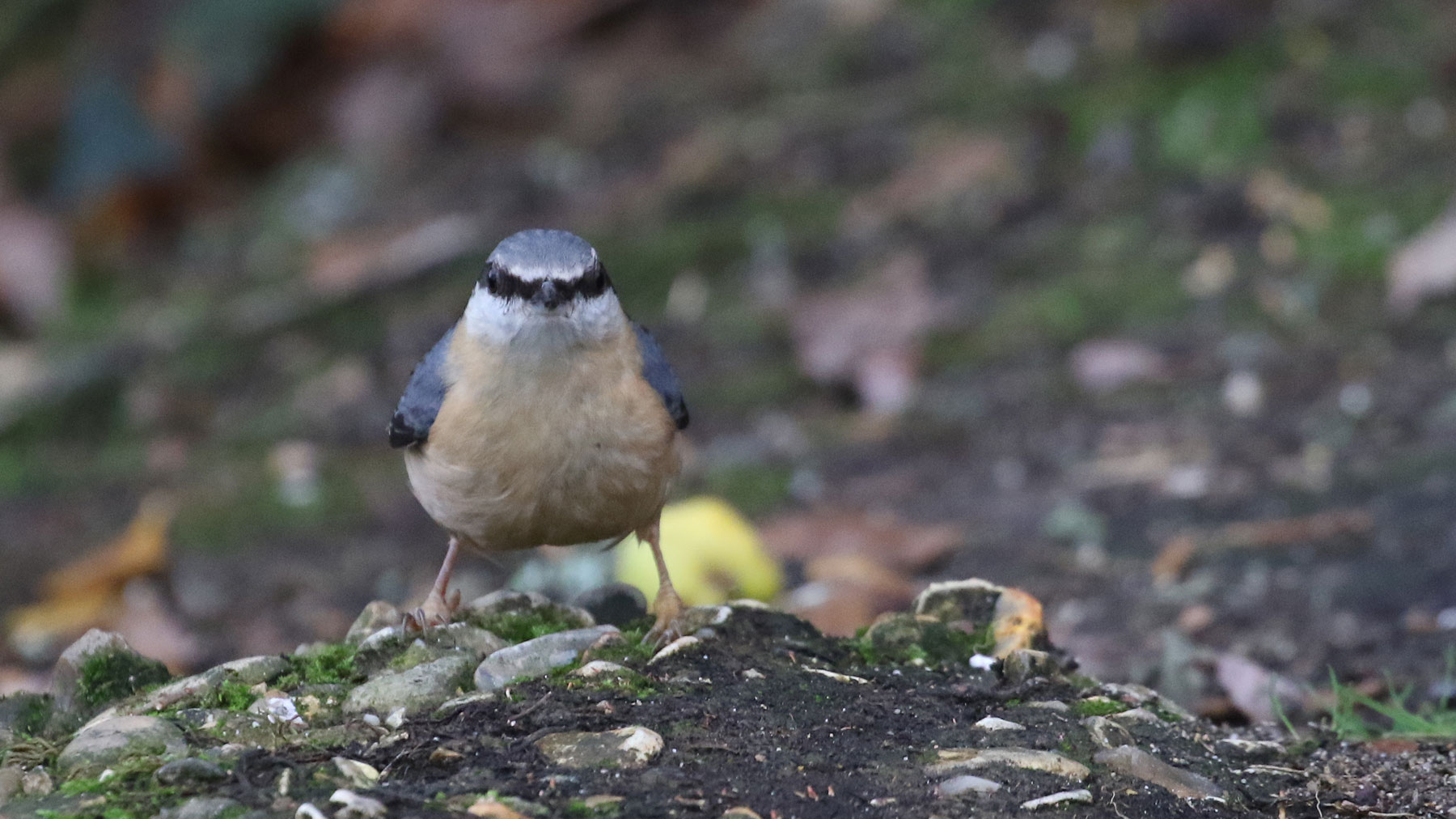
On slow days such as this there would always be the option of the Woodland Hide at Blashford.  That option has been taken from us so we had to find another way to pass the time.  Here at Eyeworth, a bag of seed works wonders and very soon we were surrounded by four species of Tit and a very impressive couple of Nuthatch.


There is a clear pecking order, the Nuthatch being the top dog, that bill being more than enough to frighten off the smaller Tits and even the Great Tit.


Interestingly both Nuthatches would take more seed than they would eat and would fly up into the trees and push the seed into cracks or broken branches in the tree.  They weren't alone with the Tits doing something similar, with plenty of food they were not just eating it but saving it by caching in holes and crevices


The smallest Tit and most nervous of all the others was the Coal Tit.


The most numerous was the Blue Tit, at one point there were eight on the ground, but many more in the trees and bushes.  This one looked splendid with a background of golden Beech leaves.


The Marsh Tits came next for numbers, as bullish as the Blue Tits when it came to taking the seed, but still very wary of the Nuthatches.  Here again with the beech leaves for a background.


But also in the branches.


A smart tidy looking tit with it's shiny black cap and black bib.


Then framed amongst the lichen.


All the birds had smart plumage, probably something to do with the ready available supply of food, non more so than this very impressive looking Great Tit.


With daylight slipping away we dragged ourselves away from the photogenic birds and made the short journey to Black Gutter Bottom.  Again it was to be patience, footwork and luck.  Hen Harrier have been seen, we found out there have been two ring-tails and a silver grey male.

We crossed the stream with hope, walked up to Leaden Hall and then across to look out over Ashley Hole, nothing.  Well that is not strictly true, the Fallow Deer can be considered to be common here now, a group of four hinds watched as we walked down the valley.


Away to the west was a larger group, as the light disappeared they were feeding, stretched out on the slope of the valley and in amongst them was an all white female.


We scanned in hope, we stood in hope and we crossed the valley in hope, still nothing.

I had resisted my favourite tree as we walked down to Black Gutter, but as we crossed the stream in Ashley Hole to come back I was taken by a tree at the head of the valley, if only the male Hen Harrier had drifted into the photograph.  Again better in black and white.


Sensing defeat we trudged on across Leaden Hall and back down to Black Gutter Bottom.  We will see one this winter I am sure, it will though require 20 percent patience and 80 percent luck I think, ever the optimist I think.

A different day with not much about, but for me it was all about being outside from dawn to dusk.  A great walk, some great chat and laughs, I need that after a week in the office.