Showing posts with label wood white. Show all posts

Thursday, 31 December 2020

2020 - A Year Like No Other

 As 2020 comes to an end it is time to look back on the high points of the year from a wildlife perspective.  This was a year like no other for me, the first time I can say that I have not left the country, or been on an aeroplane!  This can be seen in my review of the year.  The plans I made at the start of the year for holidays on the Isle of Mull and in Madagascar all put on hold due to some invisible enemy that has reeked havoc through out the United Kingdoms people and economy.

However back at the start of the year all was normal and nobody had even dreamed of using words like "lockdown", "pandemic" or "covid-19".  Prime Minister briefings were done at times of elections and the concern we all had was would we "Get Brexit Done"  So it is in January I start my review of my adventures in the natural world in 2020.

January

 The year started in Somerset, at the RSPB Reserve at Ham Wall.  A glorious evening provided a wonderful back drop to the Starling murmaration once again.  No matter how many times you see this spectacle it never fails to impress.  Other highlights on the reserve were Bittern and Great and Cattle Egret.


Back in Hampshire it was the customary trip to Southsea for Purple Sandpipers.  These waders are extremely photogenic as they forage around the rocks at the base of the sea wall around Southsea Castle.  A little later we were peering through a hedge in Warblington to try and get good views of Cattle Egret.

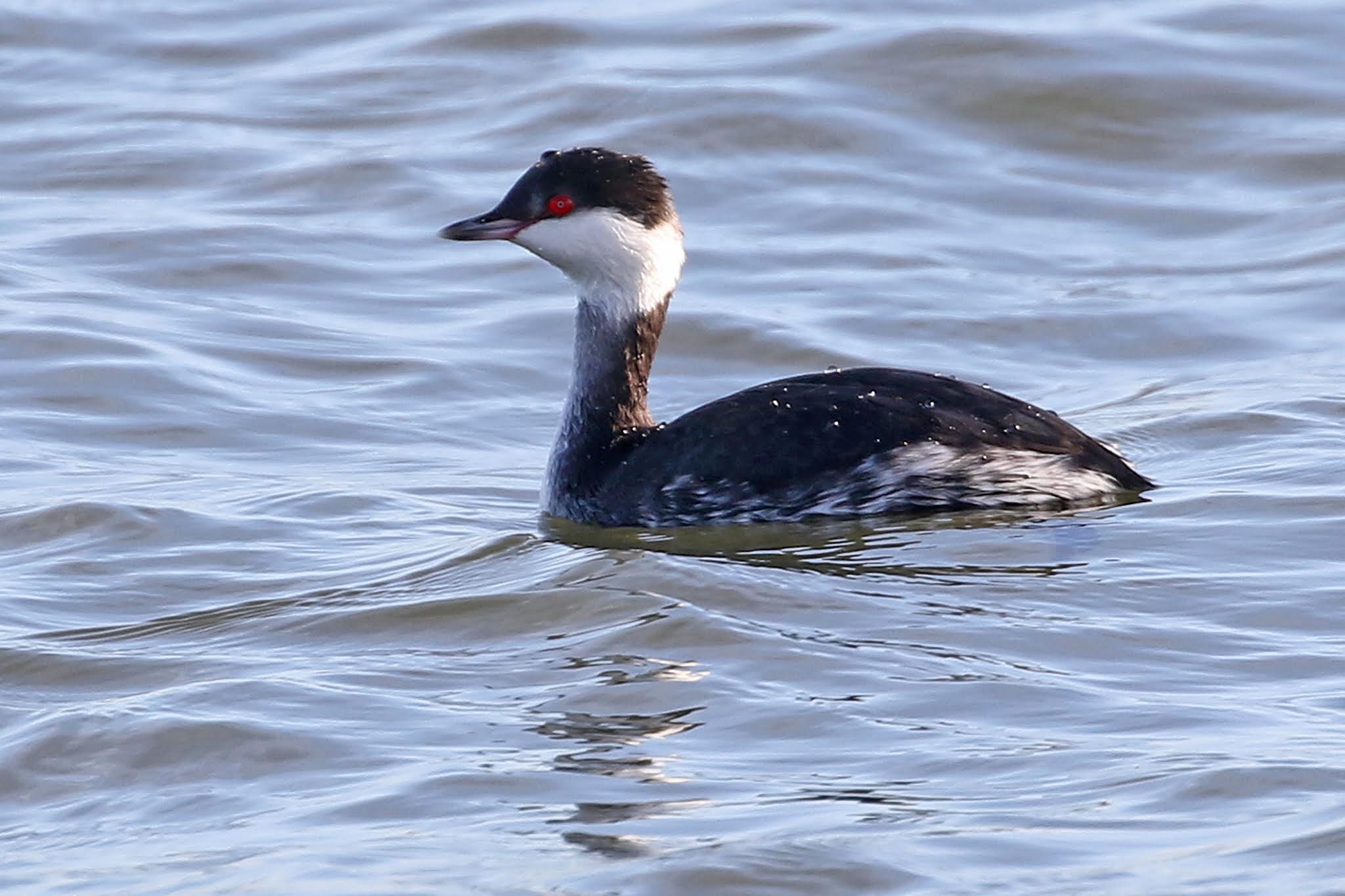
Towards the end of the month it was a trip to Keyhaven and Pennington, here the star of the show was the weather, a glorious day proving wonderful light and still water reflections.  Supporting cast were the waders, a very close Spoonbill and all the wildfowl in wonderful light.  But the undoubted star was a group of four Slavonian Grebes that allowed to get close to along the sea wall.

February

By now we were aware of virus that was infecting people in China and some parts of Asia but for now that was all, life continued.  The month started with a trip outside of Hampshire.  Ian and I headed east to Pulborough Brooks.  Early morning we had a very pleasant surprise as a Barn Owl hunted around the Winpenny Hide.


A Hen Harrier also put in a distant appearance from the West Mead Hide, but later after leaving Pulborough for Amberley Wildbrooks we had a wonderful encounter with maybe the same bird.


The following week we were chasing year ticks.  A smart male Black Redstart at Daedalus in Lee-on-the Solent was quickly found.


Then it was off to the New Forest for a long staying Hoopoe at Badminston Gravel Pits.  This wasn't as easy for us but we eventually caught up with it as it fed in one of the horse fields.


The rest of day we spent around the various sites in the New Forest ending up with the Mandarins at Eyeworth Pond.

With warnings of torrential rain the next weekend I decided to head east again in the hope of avoiding it for a lot of the daylight hours.  I was also after a duck I hadn't seen for a longtime, a drake Smew one of which was being seen regularly on the pits at RSPB Dungeness.  After a couple of circuits I finally managed a scope view of it distantly at the back of a pool close to the entrance.  Sadly the photographs did not do this spectacular duck justice.  One bonus was a Stoat that showed very well on the path in front of me.


The middle of the month saw us in the New Forest once again.  Starting at Acres Down we managed to find Hawfinch and Woodlark, a trip then to Toyd Down where we were able to find Corn Bunting, Yellowhammer and a Great Bustard.  The bustard was one of the introduction scheme on Salisbury but none the less a wonderful bird to see.


With 2020 being a Leap Year there was one extra days birding in February and we headed to Hayling Island where we were after the Great Northern Divers that were present on the east side between Sandy Point and West Head in West Sussex.


During the afternoon we spent time around Northney Marina and the Oyster Beds where this drake Red-breasted Merganser came close.


March

It would be true to say that there was by early March a lot of awareness of the virus with reports of many deaths in Italy and Spain, but we were still not appreciating the critical situation we were facing up until the middle of the month life was still very much as normal as could be expected.  The middle of the month saw a trip to Acres Down once again.  We managed to find the resident specialists, Crossbill, Firecrest, Lesser Redpolls and Woodlark.  But the highlight was a Lesser Spotted Woodpecker, but still it was not possible to get the photograph we craved.  A very distant Goshawk made a good visit.  From there it was to Blashford and the Woodland Hide that provided some great photos of the commoner woodland birds.


Events were brought closer to home on the 18th March.  BOC decided to make all staff work from home and so would start nine and a half months working from my home office, although I didn't know this at the time.  I could still get out though and on the 21st started at Hill Head and the Canal path.  The first singing Chiffchaffs of the year and the resident birds nesting.  Back at Hill Head the high tide had forced the Sanderling up on to the beach, the first of many Sanderling photos this year.


But the highlight was a walk around Browndown, there were Dartford Warblers, singing Greenfinch and the first butterflies of the year, Peacock and Comma, but the highlight were some amazing encounters with up to four Adder.


The following Monday the announcement was made that the whole country would go on a hard lockdown with restrictions on travel and the time you could spend outdoors.  Fortunately, living in the countryside, it wasn't as bad as it could have been, but it meant my travels around the county would stop and it was a return to "Around Four Marks"

The garden was busy, the regulars, Blackbird and Robin starting breeding already and the first Peacock butterfly of the year.  On my exercise walks in the last week of March there was encounters with Red Kite, a bird a really appreciate locally.


One piece of wonderful news at the end of the month amidst the gloom and despair was the birth of my first grandson Freddie

April

There was a routine for working from home, work up to just after 4:00pm and then take ourselves off for a walk through the village.  The clocks had just gone back and the weather had decided it was going to behave.  Weekends I ventured further for longer but never leaving the boundaries of the Four Marks patch and always on foot, the car staying on the drive for six weeks.  The common migrants arrived around the village, Chiffchaff song was joined by the Blackcap and, eventually at the end of the month the Whitethroat.


The Tawny Owl I have seen for the last eight years was present in the same tree once again, wonderful to catch up with it for yet another year.


Swallows took a while to arrive and when they did around the third week of the month it was not in the numbers we have been used to in previous years.

The end of the month saw glorious weather and this heralded the arrival of Wheatear and many butterflies the pick of which at this time of year is always the Orange Tip.


Six weeks into lockdown and at the start of the month I ventured away from the village.  First was a trip to Noar Hill and the Duke of Burgundy butterflies and then to Magdalen Hill, a week later.  With the weather playing its part the butterflies were very uplifting.


The bird of the lockdown for me though was the Firecrest.  I managed to find at least ten individuals locally of this gorgeous little bird.


The third week of the month is typically the time to visit the New Forest.  We caught up with the Redstarts and other locally special birds.  From Acres Down we spent the afternoon at Martin Down with huge numbers of butterflies, stand out was 51 Marsh Fritillaries, 77 Small Heath and 48 Brimstone.


I am normally away at the end of the May, this year it was meant to be the Isle of Mull, but was not to be.  So at the end of the month I found myself at Pennington and the New Forest.  Avocets and Swifts were the stars at Pennington while Pearl-bordered Fritillaries were found in the Forest.


The last weekend it was another glorious day, starting at Bentley Wood and then Stockbridge Common and Fishlake Meadows.  Managed to catch up with a Small Pearl-bordered Fritillary, they are becoming scarce now in Hampshire, the first Dark-green Fritillary at Stockbridge and some Demoiselles at Fishlake Meadows.


June

At the start of the month we went out of the county, this time heading west into Dorset and Durlston Country Park.  The target bird was Puffin, Dancing Ledge is the furthest Puffin colony east along the south coast.  Views were distant but very acceptable.  A Peregrine put in an appearance on the cliffs and the whole park was alive with wild flowers including many Bee Orchids.


Another visit to Martin Down in the middle of the month was a fantastic day with me having to split my blog into two separate posts, the first Birds and Orchids, the second, Butterflies.  Butterfly, Fragrant and Pyramid orchids all along the dyke and  Turtle Dove, Corn Bunting and Lesser Whitethroat the stand out birds.  Of the butterflies, many Marbled Whites, Dark Green and Silver-washed Fritillary.  In the afternoon a trip to Shatterford produced Silver-studded Blues.  For me though the highlight of the day was early morning views of Martin Down, a stunning place.


A trip to Gosport, Browndown and Portsdown Hill later in the month was all about the butterflies.  Disappointingly it was only very brief views of White-letter Hairstreak, but Marbled White, and Purple Hairstreak more than made up for it.


End of the month we were heading west, this time into West Sussex and Tugley Woods.  We managed to get views of Purple Emperor and also White Admiral and Silver-washed Fritillary, unfortunately we didn't find Wood White.

July

A trip to Fishlake Meadows at the start of the year to try and catch up with an Osprey had the predictable result, however the afternoon spent in West Wood just outside Winchester was much more productive with some great butterflies, including brief glimpses of the sought after Purple Emperor.  A first visit here produced great views of Dark-green and Silver-washed Fritillary, while the Brimstone put on an amazing light show.


Middle of the month it was a long day starting at Keyhaven and making my way back home via the New Forest, Browndown and Old Winchester Hill.  Little Ringed Plover was the stand out bird at Keyhaven, there was no Grayling in the New Forest, but they were plentiful at Browndown.  Old Winchester Hill was covered in Chalkhill Blues and a great collection of Marbled Whites, Dark-green Fritillaries and many of the commoner butterflies.


On the last day of July we set off for a week away in Devon.  First stop was Labrador Bay just outside.  It had been a long while since I had seen Cirl Bunting in the UK and it didn't take long to find one.  From there it was into Dunsford Wood for Dipper, a great start to the week.


August

Weather wise it was an indifferent week, but we did manage to find my first Wood White for sometime at Meeth Quarry and capture on the trip cam an otter on the river alongside the cottage we were staying in.


We drew a blank with Wall Brown and Brown Hairstreak at Shipton Belinger on an appalling day and the only highlight was a Water Rail at Titchfield Haven.

The end of August we spent a week in Suffolk which had its own story to tell.  A couple of trips to Minsmere did not produce much of interest, it was just lovely to visit.  The bird of the trip was a Spotted Flycatcher family outside the cottage.


On the way back from Suffolk I had the opportunity to spend a nostalgic couple of hours at East Tilbury in Essex, nothing of note to report just some wonderful memories.

September

Back in Hampshire the month started at Titchfield and then on to Farlington Marshes.  At the Haven we started up the canal path where there were migrant warblers and a nice female Redstart.  Once the reserve opened we were treated to a wader show from the Meon Shore Hide.  Little Stint, Curlew, Green and Common Sandpiper, Knot and Ruff.  At Farlington it was Yellow Wagtail and Wheatear, plus another six Curlew Sandpiper.


Mid month it was back to Farlington where the Curlew Sandpipers were still about but I missed the star turns of Osprey and Pectoral Sandpiper.  From Farlington I went to Old Winchester Hill where I didn't expect too much but turned out to be pleasantly surprised.  A Redstart when I arrived and later in the day a fly over Osprey.  In between some wonderful views of Kestrel and Red Kite.  But it was the butterflies that were the highlight, Small Copper, a second brood of Adonis Blue, Clouded Yellow and  Silver-spotted Skipper.


The end of the month saw another walk along the Titchfield Canal Path, this time a lot quieter with just a Chiffchaff and Willow Warbler.  On the reserve the numbers of waders was much reduced although there were some great views of Snipe and Black-tailed Godwit.


October

Through the summer there were signs that just maybe the virus was on the run, but gradually from September it started to make a comeback, mostly in the north but enough to have the government set up a three tier system with there being varied restrictions depending on the tier.  For now we were in the lowest tier, but there was always the threat of lockdown in the media.

The start of the month saw some horrendous weather with heavy rain so much so that the first outing of the month was restricted to an afternoon at Farlington.  The trip though did produce two Little Stint in amongst the high tide roost.  As its Farlington there was always a Kestrel to entertain.


News broke on Friday the 9th of a Wilson's Phalarope at Fishtail.  Anticipating a large crowd we arrived very early and made our way in the dark across the old tip to the sea wall.  We passed a Grey Phalarope to get to the south west corner where the Wilson's put on an amazing display all day. There were two Grey Phalaropes as well that were so photogenic.  Both phalaropes must have consumed thousands of megabytes of disc space during their stays. A trip in the afternoon to Leaden Hall failed to find the hoped for Ring Ouzel.


The following weekend we were back at Leaden Hall for the annual Ring Ouzel pilgrimage.  This time though there was not the partial glimpses and flight shots, three birds showed very well.  The afternoon was spent at Warsash where we finally managed to catch up with the Workman Lane Little Owl, two in fact.


On the 24th we were back at Farlington, once again the forecast was not good and we were looking to make the most of the dry weather.  An early Short-eared Owl was a lift although it was in the gloom and no photographs.  The afternoon was spent at Titchfield in the hide until the high winds closed the reserve early.


The last day of the month saw more bad weather forecast.  We were into Titchfield early, camped out in the Spurgin Hide while the wind and rain battered the reserve.  Once the rain cleared the sun came out and we had some wonderful views of Penduline Tits.


November

Increasing cases of covid saw the whole country go into a month long lockdown.  It was not as severe as earlier in the year with schools still open.  We were also allowed to meet one person outside so I was able to continue birding with Ian.

On the 7th we started at Farlington where there was no early Short-eared Owl but some wonderful early morning light that worked so well with the Pintail on the lake.


A short trip to Oyster Beds at Hayling saw eight Black-necked Grebe and a late Clouded Yellow butterfly.  We returned to Farlington in the afternoon to be greeted with all the car parks fulls and many people walking the sea wall, they had no shops to go to!  Despite this we were treated to some wonderful views of a Short-eared Owl that came across the reed bed, over our heads and across the water and up to Portsdown Hill.


The middle of the month saw yet another atrocious weather forecast which restricted us to about three hours of birding at Hill Head.  In the time though I did get some wonderful views of the Sanderling on the beach.  With the reserve closed due to lockdown the day came to a quick end.


The following weekend we were in the New Forest in search of shrike, merlin and harriers.  We saw neither but enjoyed a nice walk around a new area of the Forest for us and did get some good views of Crossbill.  There was also someone watching us.


On the Sunday a walk along the beach at Hill Head provided some wonderful light for black and white photography.


At the end of the month we were once again back at Titchfield Haven, early morning it was very misty with a light easterly that delivered a surprise in the form of a Great Skua.  A distinctive bird in that it would perform 360 degree rolls which to start with we thought was in response to mobbing but turned out it was just doing this all the time.  When the sun came through there were distant views of Great Northern and Red-throated Diver from Brownwich and  great views of Marsh Harrier over the reserve, the Sanderling on the beach and three entertaining Little Grebes from the bridge.


December

Another awful weather forecast on Saturday the 5th saw us change plans at the last moment and meet at Hill Head.  The conditions there were a little better but with a strong easterly.  The hope was for something on the sea as I watched the Sanderling on the beach.  What I didn't expect was a smart male Snow Bunting to appear which it did for 45 minutes before heading south west high.  After that it was left to the Sanderling to entertain and a single Red-throated Diver heading east.


The next weekend we finally got back to Pennington, arriving at first light with huge numbers of wildfowl on the high tide and lagoons, and we caught up with nine Barnacle Geese in the field along the lane.  There was some wonderful light that lit up the Pintail and there was also a pair of Kingfisher, the first for some time.  But the highlight of the day were four Tundra Bean Geese on Pennington Marsh and then over our heads in the early afternoon.


The last Saturday before Christmas we were back at Hill Head once again.  It was the usual fare first thing in the morning, and later we walked a very muddy canal path where we had a great encounter with a Sparrowhawk and finally caught up with the nine White-fronted Geese
that had been in the fields south of Posbrook farm for ten days.


Wednesday, 12 August 2020

3rd August - Rocky Valley, Tintagel, Cornwall & Meeth Quarry, Devon


My first trip to Rocky Valley, just outside Tintagel in Cornwall, was in the early eighties, Helen introduced me to the valley as she had first visited on family holidays before we met.  Since then I have come back with her on many occasions, together with parents and with the children.  Its not a big place, although memories can alter perception, a stream runs from the road side past houses and then down through a steep gorge to the Atlantic Ocean.  It was here I saw my first Dipper and had an interesting cream tea with a very inebriated host and two large bull mastiff dogs.

The stream starts life high up on Venn Down, 820ft above sea level. From there it meanders through fields before tumbling dramatically, first at the waterfalls at St Nectan’s Glen, then through rocky bluffs and deep clefts all the way to the open ocean in the bay near Bossiney.

The holiday in Devon was our chance to return, but we were concerned about the possible number of people that could descend on the place.  The answer was an early start and we turned up just before 7:30, as hoped the place was empty, no cars and no people.  The house above was the old farmhouse from where the infamous cream teas were served, the stream that created the valley running close to the garden.  The house today has been converted into holiday cottages.

It is a steep descent from the road and we made our way to the footpath in silence as we remembered the times before we walked here.  the footpath was wet and muddy and in places the rocks slippery.  We crossed a bridge over the stream and looked up stream in the hope of a Dipper once again.

Looking down stream it appears calmer

The path winds through the woodland to an old ruined mill, crossing the stream once again it opens out into a valley with grasses and flowers lining both sides.  In 2007 the bridges we had crossed on previous visits were washed away by a flash flood.  The replacements look a lot more sturdier. 

Rocky Valley was mentioned in travel books as a place of exceptional beauty as early as 1897.  The valley is owned by the National Trust and is home to 161 different species of moss


A little further along the stream tumbles through several waterfalls.


Before leveling out again to less dramatic falls to make its way to the ocean

The path only goes so far and it was not possible to see the stream tumble into the ocean without scrambling across the rocks.  I decided against this and turned the attention to climbing the path up the side of the valley to look out across the cliffs and bay.

From the top of the cliff there were views of passing Fulmar and distant Gannet, but more spectacular were the views across Bossiney Bay towards the south west.

And looking north east a cliff stack and distant views of the Lundy Island

Walking back down the path into the valley the gorge was covered in the orange red iris like flowers.

The only bird life we encountered in the valley itself was a very bedraggled Rock Pipit and this Grey Wagtail.

There are three mills on the stream, the lowest, Trethevy Mill, is derelict and was used in the eighteenth century to manufacture woollen textiles.  We passed through the ruin on the way down, but stopped to have more of a look coming back.  There are a number of dates carved into the stonework of the derelict Trethevy Mill, the earliest being “W.T. 1779”

In 1948 Rock carvings were discovered, believed by some to be from the early Bronze Age (1800-1400 BC). The two carvings take the form of circular labyrinths. 

Modern scholars believe that, as the labyrinths were carved on a quarried wall with a metal tool, they are likely to be less than three hundred years old. In 2005 it was claimed that another carving can be seen, much fainter than the first two, leading to speculation that the two well-defined carvings are copies of ones that are much earlier: this has yet to be proved.

The area around these carvings has now become somewhat of a focus for Neopaganism and New Age beliefs.

From the mill we made our way back up the path and to the car.  There was still no one else about and we had been lucky to enjoy the valley all on our own.  From the valley we drove into Tintagel and found a little cafe to have a coffee and some breakfast.  We were back on the road as the tourist crowds started to appear in Tintagel.  

With the sun now out and it being warm we decided to head for Meeth once again, I was determined to find the elusive Wood White and it would be nice to see it in better weather.

The car park wasn't that full when we arrived and we walked down the Tarka trail.  On a bend there was a nice sheltered spot and turns out this was where Ian had seen a Wood White a week earlier.  Walking around there were several white butterflies that I chased around willing them to settle which finally one did, unfortunately it wasn't the one I was after, I was deceived once again by a Green-veined White.

A very smart Peacock was around the area giving great views.


The Knapweed being the major attraction, a stunningly overlooked butterfly


Other butterflies about were Gatekeeper, probably the most numerous across the whole visit.  Getting close we were able to appreciate the detail of the butterfly with the delicate white spots within the eye spot and on the hind wing

Then a mating couple

There were also a few damselflies about this a Common Blue.

The path then has silver Birch and bramble lining each side and this proved a great area for Silver-washed Fritillaries, there were at least four individuals all in differing states of condition.  This one a little tattered

While this one was in perfect condition and posing against a perfect black background


They were unusually approachable and I wanted to be able to show Helen the lovely "silver wash" on the under wing, slowly one closed up the wings to show in a way.


They also allowed me to get in close as it nectared on the knapweed


I had not appreciated the mix of colours in the hairs on the thorax, a beautiful mix of greens blue and orange.

We made our way back to the entrance where the Tarka Trail crosses the reserve, on the way some more Damselflies.  This, a lovely delicate Emerald Damselfly

It can be found almost anywhere in Britain in late summer.  It breeds in shallow pools, the numbers peaking in late summer which is unusual in British Damselflies.

For once a Southern Hawker settled on the hedge to allow photographs

The small pond is a picnic spot and a large school of Roach could be seen circling the spot, they are probably benefiting from the remnants of the picnics.  The roach is a fairly deep-bodied, silvery fish, with dark, reddish-brown fins. It is deeper-bodied than both the slender chub and dace, but is very similar to the Rudd whose protruding lower lip is its defining characteristic.

As we watched the Roach a blue butterfly passed us, finally settling on the mud on the ground to reveal itself as a Holly Blue

Then a white butterfly appeared and immediately we could see the flight was so different from any other white.  Best described as fluttering with movement up and down as if floating on gossamer wings.  It is always the way when you look for something you so dearly want to see, the blow of a whale, or a skua out to sea, lots of things could be it, but when you see it you know it couldn't be anything else.

This butterfly, though, would not settle to confirm its identity and we followed it up the track and then back again before eventually it settled in the grass.

I had the photograph to confirm the identification, but I wanted more, so when it took off again I was off following as it fluttered slowly, teasing as it moved around the grass and the hawthorn bushes.  Finally it settled.

The Wood White is one of our daintiest butterflies with one of the slowest and delicate flights of all the British butterflies. When at rest, the rounded tips of the forewings provide one of the main distinguishing features between this butterfly and other "whites". Adults always rest with their wings closed. In flight, the male can be distinguished from the female by a black spot at the tip of the forewings that is greatly reduced in the female. 

The Wood White breeds in tall grassland or light scrub, in partially shaded or edge habitats. In Britain, most colonies breed in woodland rides and clearings, though a few large colonies occur on coastal undercliffs. A few smaller colonies occur on disused railway lines and around rough, overgrown field edges (for example like here in north Devon).

The English colonies emerge in early May and fly until the end of June.  Males fly almost continuously throughout the day in fine weather, patrolling to find a mate. Females spend much of their time feeding on flowers and resting.  A second brood which is what this butterfly belongs to emerges in August and sometimes can be in large numbers

I have seen these delightful butterflies on the continent, France, Italy and Portugal but this was my first in the United Kingdom.  While they are not found in Hampshire there is a colony in Chiddingfold Woods in Surrey but I have never managed to find them, hopefully now after visiting the wood this year that will change next year.


I pulled my self away from the butterfly and we continued our walk towards Ash Moor.  There were many Gatekeeper and Meadow Brown about, but in amongst them I was able to find this Large Skipper 

Coming back toward the pond once again this female Beautiful Demoiselle appeared on the hazel leaves close to the water.


We walked up the path towards Woolen Lake, the weather so much different from when we had been here on Saturday, blue skies, white fluffy clouds and plenty of sunshine.

When here Saturday we had admired the flowers and hoped then to be able to see it in the sunshine, well today we could and there were Meadow Browns and Gatekeeper, of course, but also several Peacock.

Six Spot Burnets were about on Saturday and could also be seen today

While one or two Common Blues were also present.

In amongst these were also several, maybe three of four, Wood Whites, one settling to show the soft pastel grey on the wings.


We made our way across the old slurry tip and then down the path back to the main path.  Along the wooded path we came across yet another Wood White.  As we made our way back to the car park I came across this female White-legged Damselfly

They prefer slow moving water and the tall dense vegetation is where the adults can be found.  It is locally abundant on waters south of the Wash.  In Devon it is found along the Torridge and Tamar rivers.

A little further along a really superb Small Tortoiseshell continuing the good number of sightings of this species this year

After a successful visit in finding the Wood White we returned to the cottage where we went and sat by the river in the hope of something passing by.  As we sat we were joined by a Wren family, creeping amongst the tangle of old tree roots.

As we waited I was fascinated by the wasps coming to the flowers on the river bank.

Then finally we had a Kingfisher fly past, it went down river!